
A 2026 survey by the dating platform Dating.com found that 82% of people in fully online relationships say the mystery of never having met their partner in person is at least somewhat of a turn-on. Read that twice. Not meeting someone is now, for a meaningful share of daters, part of the appeal rather than a problem to be solved.
That single number tells you most of what you need to know about where dating has landed in 2026. It didn’t stop at “meet on an app, then go to a restaurant.” It kept evolving, into relationships that begin, develop, and sometimes stay entirely inside a screen: texting, sexting, video calls, voice notes, the occasional AI-polished message. Cyber dating is no longer the awkward cousin of “real” dating. For a growing number of people, it is the relationship.
How many people are actually doing this
Start with the basics, because the numbers move faster than the cultural narrative around them. According to SSRS’s 2026 national poll on online dating, 37% of U.S. adults have used a dating site or app at some point, and 6% are currently active users. That is up from the 30% Pew Research Center measured back in 2022, which suggests the habit hasn’t plateaued, it has just stopped being newsworthy.
The generational and identity splits are where it gets interesting.
| Group | Ever used a dating app | Currently using one |
|---|---|---|
| Adults 18–29 | 51% | 10% |
| Adults 30–49 | 53% | 8% |
| Adults 50+ | 20% | 2% |
| LGBTQIA+ adults | 63% | 14% |
| Non-LGBTQIA+ adults | 34% | 4% |
Source: SSRS Opinion Panel Omnibus, fielded January 2026, n = 2,012 U.S. adults.
Notice that 30- to 49-year-olds now use dating apps at almost the same rate as 18- to 29-year-olds. The stereotype of the app-native twentysomething and the reluctant, technophobic thirty-something no longer holds. And the main reason people give for being there hasn’t changed much from what you’d guess: 58% say they’re looking for an exclusive romantic partner, not a hookup and not “just seeing what’s out there,” according to the same SSRS data.
What has changed is how people feel about the effect it’s had on their lives. Only 20% call the impact mostly negative; 33% call it mostly positive; the largest group, 47%, says it’s been neither. That’s a genuinely unglamorous finding, and I think it’s the most honest one in the whole dataset: for most users, dating apps are not life-ruining or life-transforming. They’re logistics.
Why a screen can feel more honest than a room
Here’s the part that surprised me most while researching this. A 2026 study published in Current Psychology ran three experiments testing how much personal disclosure in a dating profile affects attraction. The finding wasn’t “more disclosure is better.” It was a Goldilocks curve: moderate self-disclosure outperformed both guarded profiles and oversharing ones, because moderate disclosure signals that the person is serious about a long-term connection without reading as desperate or performative.
That is a distinctly screen-based skill. You cannot easily calibrate “moderate disclosure” across a candlelit dinner table in real time, but you absolutely can over a week of text exchanges, where you get to choose exactly how much of yourself to reveal and when. Texting isn’t a worse version of face-to-face conversation, it’s a different instrument, one that rewards patience and pacing over spontaneity.
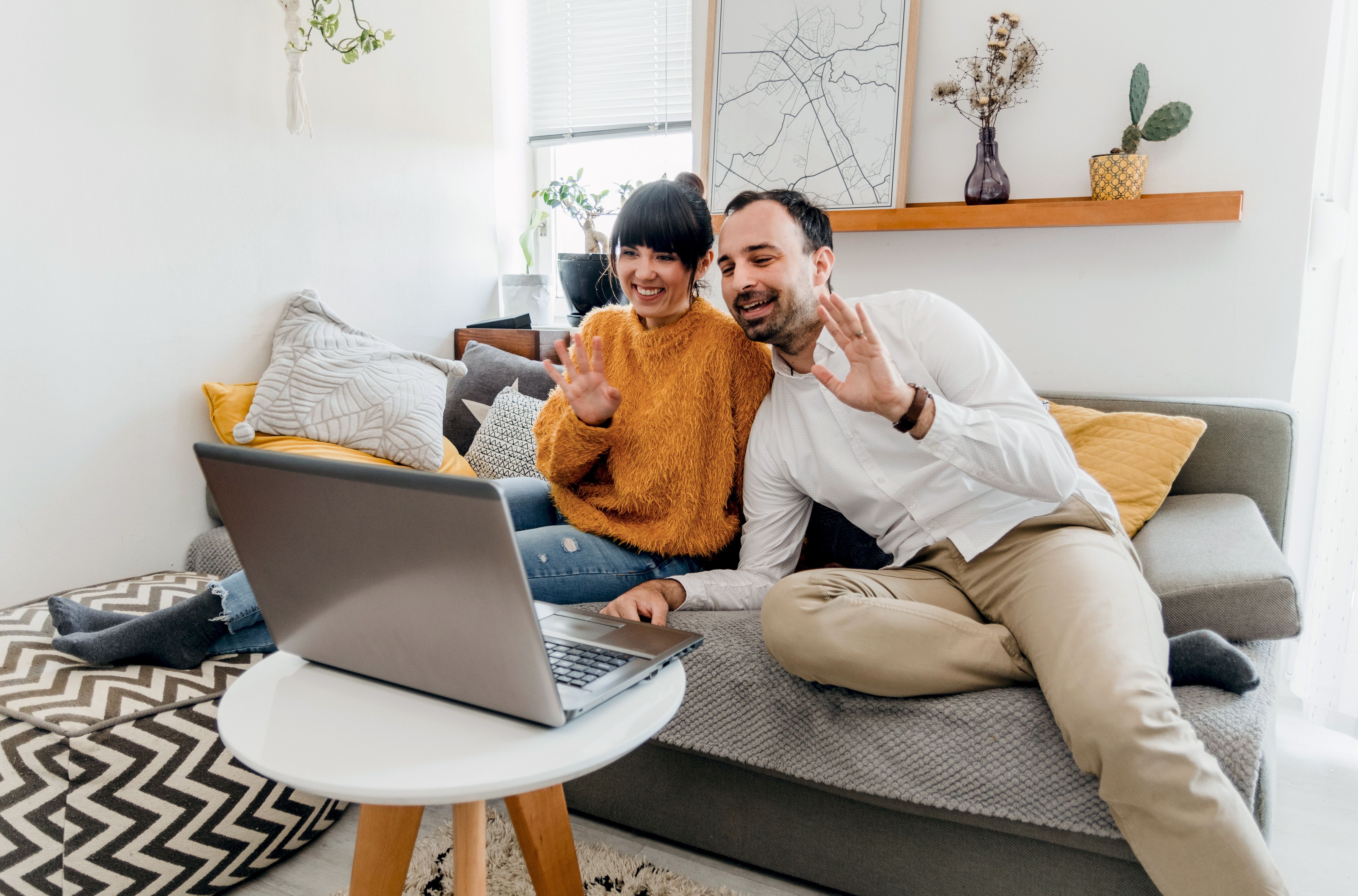
This is also why fully remote relationships, sometimes called telesexuality in industry research, have become a real category rather than a punchline. Dating.com’s 2026 survey of 1,000 adults in fully online relationships (a company survey, worth reading with that grain of salt, but the pattern lines up with what academics are finding elsewhere) reported that 47% got into their relationship specifically because they fell for someone who lives far away, 61% go on regular “virtual dates,” and 56% have introduced their online partner to friends or family. Distance, in other words, stopped being a dealbreaker and started being a design constraint people build relationships around.
The Stirling problem: less love, by the numbers
Now the part that complicates the optimistic story. A cross-cultural study out of the University of Stirling, published in Telematics and Informatics in late 2025, analyzed 6,646 partnered people across 50 countries. It found that 16% of couples met online overall, rising to 21% among couples who got together after 2010. The uncomfortable finding: people who met their partner online reported lower relationship satisfaction and less intense experienced love than those who met offline, with effect sizes the researchers describe as small to medium.
That doesn’t mean online-met couples are doomed, and the researchers were careful not to claim that. But it’s a direct rebuttal to the SSRS finding that 58% of Americans believe online-formed relationships are just as successful as offline ones. The public’s optimism about cyber dating and the measured outcomes of cyber dating are not the same thing, and I think anyone writing about this topic has an obligation to say so instead of just repeating the flattering half.
My honest read: the gap probably isn’t about the technology itself, it’s about what the technology optimizes for. Apps and messaging are extraordinary at solving the discovery problem, surfacing someone you’d never have bumped into otherwise. They’re much weaker at replicating the thousand small, unplanned moments (how someone treats a waiter, how they react to a delay, a shared silence that isn’t awkward) that seem to be where a lot of relationship satisfaction actually gets built.
When your match isn’t fully human
If self-disclosure timing is a skill, AI has just made it possible to outsource. A 2026 study presented at the CHI conference surveyed 113 online daters who had used generative AI in their profiles or messages, people who between them averaged 48.5 different messaging partners and 6.6 in-person dates. The most common use wasn’t fixing up a bio (though 84 of 113 did that); it was writing private messages to matches in real time, which 93 of the 113 participants admitted to.
Almost none of them told their match. The reason given most often wasn’t shame about using AI, it was fear that disclosure would tank their chances, which is its own small tragedy: people using AI specifically to seem more appealing, then hiding that fact specifically to stay appealing. The researchers frame this as an informed-consent problem, since a face-to-face date can be built entirely on a personality that a chatbot invented.
Then there’s the more direct version: dating the AI itself. A 2026 paper in AI & Society on what its authors call “Intimacy by Design” cites early large-sample surveys estimating that 16 to 18% of respondents have experimented with an AI companion in a romantic capacity, on apps like Replika or Character.AI. The researchers note this is probably an undercount, given the stigma still attached to admitting it. (I’d bet on undercount too. People lie to pollsters about far less embarrassing things than falling for a chatbot.)
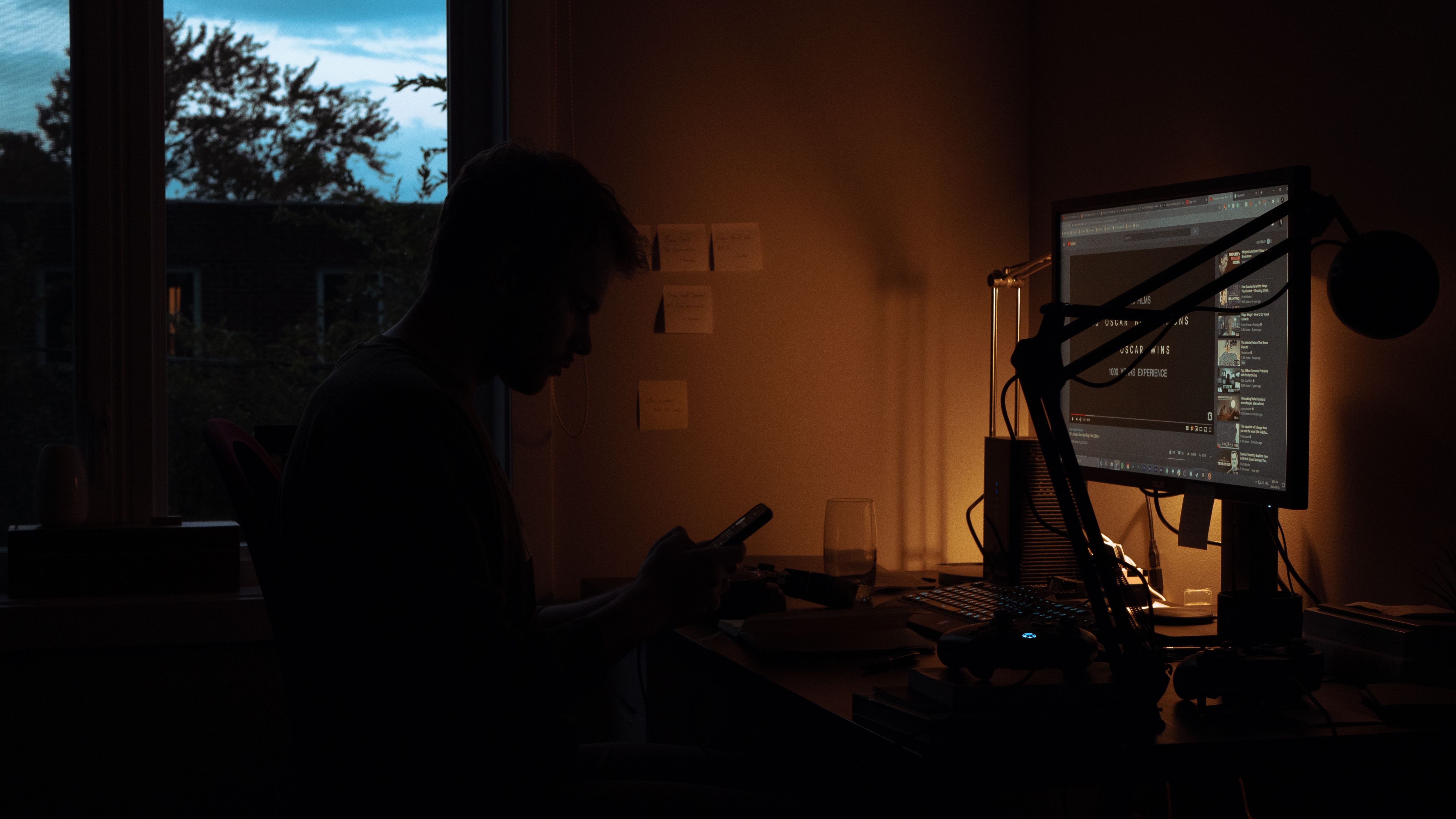
None of this is free of cost. A 2026 systematic review and meta-analysis in Communications Psychology, pooling 27 studies and 21,263 participants, found small-to-moderate associations between swiping-based app use and several negative outcomes, with the strongest effects for behavioral dysregulation (a standardized effect of g = 0.44) and body-image disturbance (g = 0.32). General wellbeing effects, notably, were small and not statistically significant, so this isn’t a story of dating apps making everyone miserable. It’s a more specific story: the swipe-and-evaluate mechanic seems to compound appearance anxiety and compulsive-use patterns in a way plain messaging or video calling doesn’t obviously replicate.
So here’s a real question worth sitting with: would you rather match with someone who spent forty minutes getting an AI to phrase the perfect opening line, or someone who took forty seconds and left a typo in? I know which one I’d pick, and I also understand exactly why so many people are choosing the polished version instead.
The harassment tax nobody puts in the app description
Pew Research Center’s landmark study on this, still the largest of its kind even a few years on, found that 48% of people who have ever used a dating site or app experienced at least one of four unwanted behaviors: unsolicited explicit images, being contacted after saying no, offensive name-calling, or physical threats. Women under 50 bore the brunt of it, with 56% reporting unwanted sexual images specifically. Separately, 52% of users believed they’d encountered an outright scammer.
These aren’t fringe numbers. They’re closer to a coin flip. Any honest account of cyber dating has to hold both things at once: it is genuinely how a large share of committed relationships now begin (SSRS puts that figure at half of all users who’ve ever used an app), and it is also an environment where harassment is closer to the median experience than the exception.
From swipe to booking: screens now broker every kind of intimacy
Widen the lens a little and the pattern isn’t limited to romance apps. The same mechanics, browse a profile, message first, agree on a meeting, now sit underneath almost every kind of arranged human connection. Companionship platforms have followed the same script: build a profile-based site, let people message before ever meeting, and let the screen do the vetting a stranger used to have to do in person. A service like Louisa runs on essentially the same interface logic as a mainstream dating app, browse, message, arrange, meet, even though the relationship on offer is a different kind entirely. It’s a small but telling sign of how completely the screen-first model has become the default way strangers negotiate meeting each other, for almost any purpose.

So does cyber dating actually work?
My honest verdict, after going through this research, is that cyber dating works very well as a filter and considerably less well as a foundation. It is genuinely good at what dating apps were originally built to do: expanding who you can meet beyond your workplace, your friend group, and your neighborhood bar. The SSRS number that sticks with me is the 50% of ever-users who report having been in a committed relationship with someone they met this way. That’s not a niche outcome.
But the Stirling data is hard to argue with, and I don’t think the industry-funded surveys touting “telesexuality” as the future of intimacy are grappling with it seriously. If relationships that start online consistently report less satisfaction and less intense love than ones that start offline, the honest conclusion isn’t “online dating is broken,” it’s “the parts of relationship-building that screens are worst at (unfiltered spontaneity, physical presence, reading a room) are doing more work than the industry likes to admit.” I’d treat the app or the chat as a way to find someone, not as a place to keep living once you have.
The one thing I’d push back on hardest is the normalization of not disclosing AI use in messages. A person is entitled to polish their bio. They are not entitled to let a chatbot run the conversation and let their date believe otherwise, that’s the informed-consent argument from the CHI paper, and I think it’s correct.
How this article was put together
This piece draws on the SSRS Opinion Panel Omnibus poll fielded in January 2026 (n=2,012), Pew Research Center’s 2022–2023 online dating survey, a 2025 University of Stirling study in Telematics and Informatics covering 50 countries, a 2026 meta-analysis in Communications Psychology pooling 27 studies, a 2026 CHI conference paper on AI-generated dating personas, a 2026 AI & Society paper on human-AI intimacy, a 2026 Current Psychology self-disclosure study, and a 2026 company survey from Dating.com, which I’ve flagged as industry research rather than peer-reviewed data since its methodology disclosure is limited. All sources were checked directly rather than via secondary summaries. Figures on app usage and public sentiment shift quickly and are worth rechecking against newer polling within a year or two.